Saturday, 23 November 2013

Film Title Design: Research

Before the 1950's film titles were not very often, or if they were, low quality. But this all changed when sound in films was introduced and titles began to get more elaborate. And then since the 1960's it became an art form in itself, with many critics claiming "Forget the film and watch the titles." There are even a number of blogs/websites that just talk about film titles alone now. One of these is Art Of The Title: http://www.artofthetitle.com/ that gives a history on the titles, reviews and interviews with the people who made them. Well worth having a look at.

Here is a clever video that shows some of the most iconic titles in film making.

Most all film titles have some form of stylised, written words that flow with the film. Typography word coming from the greeks with typos-form and graphe-writing. The end products for alot of typography can be beautiful and this is also considered art now too, with alot of modern artists basing their work around words.


Here is the opening credits to a thriller: The Purge


Overall it really does the film justices and is very visually pleasing. The music is un-conventional giving a sort of comedy element to the opening. However if I have one thing to pick at, it would be the placement of the typography. It would have been clever to have the names appear as part of the already visual text 'security cam' bars. The shots used in this all give the audience a sense of what they are about to see and to some it may be off putting but other may have gotten more interested in it.

So to be quite honest, when I look at titles everything just sort of has to fit together for me. No edging your way round something and also needs to draw me in as a viewer.

Thursday, 14 November 2013

Production Team!

So we've settled on a production team name and a (basic) logo, to produce our thriller.

Without further ado, we are, Reflection Studios!

REFLECTION STUDIOS
(Robbie, Lucy and Charlotte)

We decided to call ourselves 'Reflection Studios' as it includes our 3 initials (RLC) in the same word. After a while, we had a light bulb moment and thought "REFLECTION!" this lead us onto our idea for an ident we have that out initials will be 'reflected' onto a lake. We think that this name represents us and our production well as it symbolizes our abilities to create ideas that bounce of and reflect the others views on how something should be.

Wednesday, 13 November 2013

Film Distribution In The UK

Distribution of a film, is how the film is released and retailed. The film goes through a number of steps when distributed to make sure the film is accessible to the target audience and the worldwide network.

Here's a little animation about how films are distributed in the UK:

Thriller Opening Investigation

As part of my research for thriller openings I analysed two pieces of real media openings. The Black Swan and Sweeny Todd. Here are some screencast's of the two openings with my narrated deconstruction:


Sunday, 10 November 2013

Here's an interesting theory that we've come across, that no matter how many film there are in the world they all are variations of 22 main stories. Here is a good little illustration that explains the 22 story paths:


Saturday, 9 November 2013

Choosing A Genre To Work With

As a group many of us have been thinking about what genre of film we would be working with for the rest of the year. We researched some films and thought about what the pros and cons of each genre could be. Like this:


And then as a class we compiled all our data together thinking about all the complications and triumphs that can happen with each genre and decided that we would work with the 'Thriller' genre. This is due to the capability of creating something of good quality worth some of the highest marks we are hoping to get for our course. 


Positives of Thrillers: 
  • Realism and Realistic Elements
  • Set/Props/Costume all relatively easy to assess
  • Straight Forward Editing
  • Draws Audience In

Negatives of Thrillers:
  • Hard to fit action into 2 minuets of coursework
There turned out to be alot more positives for choosing a Thriller over everything else from both the creative side and the filming/acting side of it. So hopefully we chose this genre wisely and our coursework will be the best it can be. Now onto thinking of possible narratives!

Friday, 1 November 2013

Researching Advanced Camerawork: Crane Shots

Here is an example of a crane shot we filmed in class:


This was our first time at filming with a crane to create this type of shot, and for a first attempt at something it's fair to say that it wasn't too bad. It may be a little shaky and rough round the edges (Sometimes the individual being filmed went out of shot) but it got across the idea of how a crane shot is used and what it looks like. Hopefully we will work on this and create are more fluid and better quality crane shot in the near future.

This shot is often used in soaps and drama's when someone leaves a place of significance to the character. Giving a high view on what they are leaving behind.

Manual Focussing

Two key terms that are often used when filming Manual Focus shots are:

Depth Of Field: Depth Of Field is the term used for the distance between the object/s that are closest and furthest away in the foreground and background of the shot.

Focus Pull: Focus Pull is the technique used that transfers the focus of the shot from one object to another.

Here is an example from an actual piece of  media:


During this sequence there is a large number of focus pulls, and manual focusing. It especially becomes clear at around 2:30 while Harry is looking at his mom and 2:40 when Niall looks at his Brother. I think this is an excellent example of how the technique is used and suits the video brilliantly.

Here Some Examples of Manual Focus Pulling 


Manual focussing is a technique used in film making, while the camera is rolling to focus and un-focus accepts of the frame and footage. This technique can be used often  to make the audience focus on a certain things in the frame. 

Monday, 28 October 2013

Film Idents

To put it simply a 'Film Ident' is an opening company logo on any film that is produced. Here are a couple of examples from Universal and Fox:


Looking over both of these 'Film Idents' I feel that they are both powerful symbols of film and media alike of our time. Both of these companies are widely recognised for their idents showing that they must be successful in what they are trying to achieve, however they have been revised over the years to suit the films and the audience that will watch the film.

If you look deeper into both of the idents you might recognise their similarities like powerful, orchestral music and shiny, 3D lettering. This gives the audience a perspective on the film already that it's going to be amazing and brilliant due to the sheer power that the idents give off. Also they are both just over 20 seconds long, for a logo on anything else it can be considered too long. But for 'Film Idents' it seems just the right amount of time. If it was to be shorter then it doesn't have as much impact on the audience and their beliefs for the upcoming feature film.

On the other hand you have smaller film companies, who's idents are alot less extravagant, take Film 4 as an example:


Instead of a big, golden animation, Film 4 went with a simple 'live action' formation of the corporate logo (This is also a version of the Channel 4 company logo, the formation of a number for with separate parts). It's also considerably shorter in time and the music is alot calmer than it's big Hollywood counterparts. This gives the reader a much more relaxed approach to the film they will view.

Thursday, 24 October 2013

Opening Credit Research

As a class we gathered data about the opening credits in different genre's of film, by watching them and taking notice of each order that the names/production appears in. We realised that as we looked through the data that in most cases 'Production Associates' are always put first, starting with the studio name e.g universal, paramount.

Next is usually the actors, starting with the 'Major' roles then 'Minor' roles towards the end. Then to finish off people who made the film what it is, this also most the times ends with the 'Director' of the film.


Opening Title Research


However there is a difference between 'Opening Credits' and 'Title Sequences'. Opening Credits are merely just text on a background where as Title Sequences are more complex of that being they are an entirely separate sequence in its own right e.g James Bond films.

This is the opening titles for Scott Pilgrim vs. The World which was part of my research:


As our production team (Myself, Charlotte and Robbie) we were thinking of several ways that we could present our opening credits. We also came up with our production team name of 'Reflection Productions' notice the three letters of our first names feature in the name. This would appear as the first thing you see on the opening credits. This would be followed by:
  • Film Title?
  • Actors?
  • Sound/Edit?
  • Producer?
  • Writer?
  • Director.
This is just a basic idea of a simple some simple opening credits for our coursework. Here's a link to some opening cedits that helped us on creating a simple structure for our works.

Monday, 21 October 2013

Tracking Shots

A tracking shot is a type of camera shot/movement that is often used to physically follow a key character/object on a journey using a wheeled tracking dolly and tracks if you wish. This technique is often used to follow a journey, reveal something far away or out of a shot.

Our Example


To create these shots we used tracks and a tripod dolly. We learnt that when performing a tracking shot timing is key and both the camera operator and actor need to consider each others speeds and actions.

Boogie Nights

This is how the shot is used in the opening of the film 'Boogie Nights' it is clear that during this scene they used a dolly to follow around the characters on the dance floor and in the bar. There is very little dodgy camera movements die to the stability created by the dolly.


Three-Point Lighting

Three-point lighting used used during film making to enhance the look and feel of the film. The term three-point comes from the idea that you are using three different lights, Key Light, Filler Light and a Back Light. Here is a simulated example of how it all works: http://www.mediacollege.com/lighting/three-point/simulator.html

Our Example

This is our example of how three-point lighting is used in the film industry. It is a very important element of film making and can make or break a film. A key light, is the main light used on the person or object being filmed. A filler light 'fills' in the shadows that are caused by the key light. And the back light which is used to make the image look more 3D.

To achieve this we used two 'Red Heads' for the Key and Back lights and used a reflector for the filler light.

Thursday, 10 October 2013

Preliminary Task

The Broken Friendship


What Went Well?
As a production team the three of us (Dan, Charlotte and myself) all worked well together to produce our short film. We all listened to each others creative ideas without overpowering each other in our decisions creating and filming the piece. The actual film itself is of a decent standard for a piece of work, including all the given circumstances set for us to perform in the task. This was also thanks to our willing actors who took the time to give us a great performance to create the film.

What Is Good?
I am particularly proud of our work with the camera angles and camera movements, even though all three of us controlled the camera all the shots flowed well. While editing the match on action shots too we found that the actress had done a good job with matching her movements on each side of the door as she enters making the edit near enough perfect. However as the actress exits this was slightly harder to edit due to the movement of her hair as she turns around, we had to match this movement so her hair hadn't magically switched sides. While editing all of the shots, there was little or no continuity.

Did You Follow The Production Rules?
180 Degree Rule - Yes I believe we kept to the rule, as while the two characters were having a conversation we never went past them and round the back of them. Even as the one actress got up to exit we kept the rule enforced as when she began to move we tracked the camera with her so the audience would understand the movement.
Match On Action - I think we performed these edits and shots well, as explained in the previous question. The edits worked well with the actresses movements and the rule was clearly followed as she entered and exited the room.
Continuity - As observed in our film we believe there is no or little continuity errors throughout.

What Went Less Well?
There was no real issue while making the film other that when filming the 'Match On Action' shots there were some issues with the actors forgetting where their hands/feet were placed so that lead us to filming several versions of the same shot. But there was not issue with anything else while filming and editing the film.

What Did You Learn About Making Films and Working Within a Production Team?
When making a film I learnt that you may have/want to do shots more than once to get the film just right, this may be a bit of a pain but all in all it is worth it for the overall quality of the film.  While working in the production team set up you must have to listen to each other, and take on each-others creative ideas. That is really important if you want your film to be the best it can be, if not then the film could be a total disaster and the team could fall apart. Give everyone equal opportunities and also make sure everyone knows what they are doing in the given point.  

Tuesday, 8 October 2013

Script Research

While writing a script, there are a few things you must remember.

  • A SCRIPTS TEXT MUST BE WRITTEN IN A SIZE 12 COURIER FONT.
  • SCENE MUST BE SET, BEFORE ANY ACTION. INT/EXT, PLACE, TIME OF DAY.
  • FOLLOWED BY A QUICK SUMMARY OF THE ACTION AND STAGE DIRECTIONS.
  • CHARACTER HEADER, DIALOGUE/DIRECTIONS
At school when writing scripts we use 'Celtx' to write like a lot of film makers do now too, this software already has everything set up for the screen writer to write up their ideas. This is all the stuff you need, font, headers layout everything you need for a professional looking script. And you can get a free download of it too!

Here is an example of how the scripts are laid out from The Wizard of Oz:

As you can see, it ticks all the right boxes of how a script should be. Making it a real quality produced script.

Thursday, 3 October 2013

Continuity

The definition of continuity is:
 con·ti·nu·i·ty  
/ˌkäntnˈ(y)o͞oəitē/
Noun
  1. The unbroken and consistent existence or operation of something over a period of time.
  2. A state of stability and the absence of disruption.


In media this would mean there is a mistake in the film in which something is not consistent, e.g an object appearing or disappearing in the scene. Here is a short video explaining continuity and examples of this problem:


Wednesday, 2 October 2013

180 Degree Rule

There is a rule in film making that all film makers must abide by, the 180 Degree Rule. 180 degree's is half of a full circle, just think of an imaginary line when filming and not to step over that line where the actor(s) is/are standing. If this rule is broken in can distort and confuse the viewer.


However this idea can be broken, if you travel past the 180 degree line while the camera is still rolling with no edits and cuts to the scene. This then switches the way the 180 degree rule is in placement with actors. Using this idea of traveling with the camera still rolling does not confuse the viewer as they see the movement from one side, to the other.

Lucy

Match On Action

Match On Action is a editing technique where the actor performing some kind of action, however the camera cuts the shot is changed. However the editing is done is such way that the action is fluent and the film makers aim for no continuity. Here's a short video showing an example of a Match On Action from friends:


As you can see the movement from all the actors is fluid and fits well the edits. This does take some skill to perform and you may not get it right on the first time. We are encouraged to include match-on-action in our prelim task to show our skill at perform this edit.

Tuesday, 1 October 2013

Rule Of Thirds

You may have come across the rule of thirds in everyday life but you might not have realised it. This is usually on your cameras and phones while taking pictures or recording a video. Most people (usually younger children) believe that the center of a picture or frame is the most important bit, so they place everything in the middle of the page or picture. However in the world of film and photography it is quite the contrary.


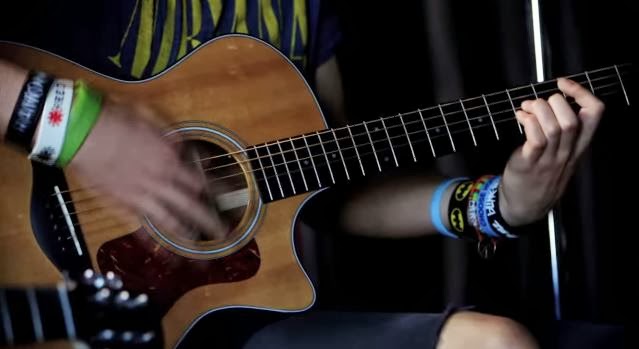
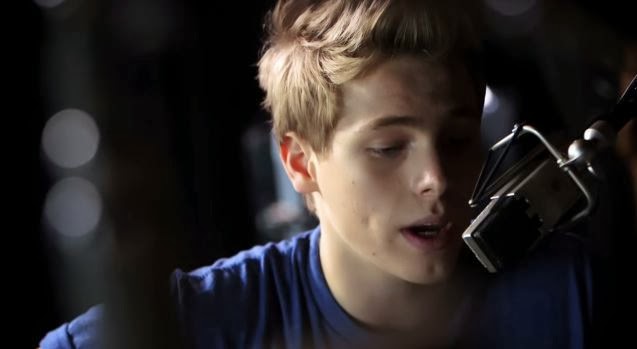
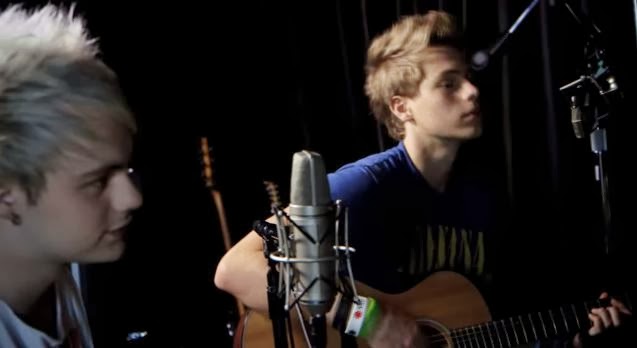
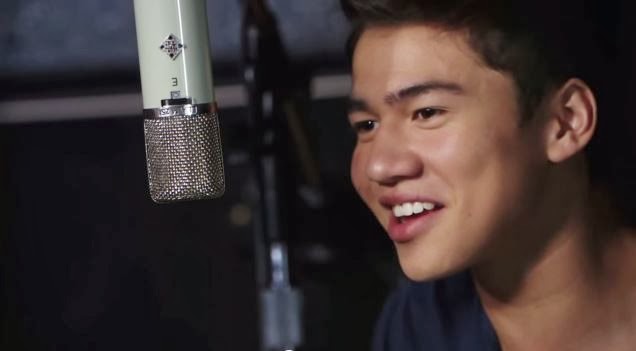
This grid is what you often see on camera screens, and is used as a guideline of placement of objects and people in the frame. The composition of theses things in a frame is very important for the viewers brains and eyes. The more center something is the more intense for our eyes it becomes, (and it's also not the first place we look). A recent music video of a band demonstrates the rule of thirds perfectly. Here is the video and some screenshots explaining the Rule Of Thirds:


If you notice while the guitar is being played, the main body of the instrument is to the left of the frame there is nothing of any significance in the center of the frame. 


As the camera focus' on the singer of the band, Luke, notice he is placed in to the right of the frame and not the center, making the framing less intense to the viewer. 

Even when there is more than one person in the frame, neither are in the center of the frame. Micheal is placed to the very left of the frame meanwhile Luke is just of center to the right. This may be because he is the 'lead' of the band.


As the camera cuts to Calum singing, he is positioned level with the microphone in being just of center. Leaving dead space in the direct center.


Ashton the drummer is also placed to the very left of the frame when he is seen playing drums. The drums are alot more in the center than him. Showing the importance of the instrument.
Even when the whole band is visible in the frame, none of them are in the center of the frame, the bass head is in the center. However it not exactly significant to the shot.


In summary the rule of thirds are an important technique in film making, that is quite subliminal to us as viewers and has integrated into a part of our everyday lives. For more deeper explanations here is a useful website explaining the rule of thirds from a photography point of view http://www.cambridgeincolour.com/tutorials/rule-of-thirds.htm

Lucy

Editing Cut Types

There are lots of different cut types within film, each giving a different feel to a film. These are:

  • Match On Action
  • After Action
  • Before Action
  • Entrance/Exit
  • Foreground Wipe
  • Look Of (P.O.V)
  • Referent
  • Linkage
  • Split Edit


Even if it may not seem like it, editing really does make or break a film, and can alter the story at any given moment and give a completely different perspective to the audience.

Monday, 30 September 2013

Camera Movements

There are several camera movements described in this video from about 2:20 onwards:


Lucy

Shot Types

Here is a useful video that will show some basic shot types that are frequently used in media:


Establishing Shot: An establishing shot is used to 'establish' where the film is set. Showing the landscape, whether that being nature, buildings etc. to 'set the scene.'

Long Shot: Long shots are used on a character, showing the whole body. Making the audience see the size, shape and wardrobe choices of a character. Helping the audience get to grips with the character.

Close Up: Close up's focus on the whole face of the character, often used to show the facial expressions clearly to the audience.

Over The Shoulder: Using an over the shoulder shot in a film can be used for the audience to see something from the characters perspective.

Medium Close: Features just the top half of the characters body, from the waist up.

Cut-In: Otherwise known as a close up of an object.

Extreme Close Up: Often features just the eyes and nose of a person. Can make the viewer feel intimidated.

Two Shot: A shot featuring two characters in the frame.
_________________________________________________


Hope this explained some of the different shot types!

Lucy


Sunday, 29 September 2013

Expected Production Workflow

When creating a film you should be expected to follow a workflow of how your product will be created and exhibited. As a group we created our 'Expected Workflow' of how are product should be created.


Saturday, 28 September 2013

Pre-Filming Research

These next few posts will be explaining several filming and shooting elements that all AS Media students should know about before filming their short films. These are:

  • Shot Types
  • Camera Movement
  • Cut Types
  • Rule Of Thirds
  • Match On Action
  • 180 Degree Rule
  • Continuity
These posts that will be spread out over a couple of days will explain theses seven different areas and will hopefully get across what each one is/means, how it works. Look forward to them, reader!

Lucy

Friday, 27 September 2013

Welcome!

Hello reader!

My name is Lucy Smith and I'm a year 12 student at Great Wyrley High School, in which I am studying for my A-Levels. This blog will contain my AS Media Studies coursework and pathway to media succession. I hope you enjoy the short films that I will make, posts about different elements of a AS Media pathway and more.

Thanks for reading!
Lucy