Monday, 20 January 2014

The Black Widow Storyboard

So What is a Storyboard?
A story board is basically a plan of each shot you have in the film using illustrations. These should include the type of shot, any sound used and the action being filmed.

Here's a professional example from Harry Potter:


How Does a Storyboards help the filming?


  • Helps planning of shots and how you want the film to look.
  • Helps prevent any frustrations with shooting scenes.
  • Used as a directors aid for creating the film.
  • Can help the editors and sound editors when the ques for sounds and cuts are.

Now this is where our thriller starts to come together.

Location Research

No film can be quality without a decent location. We use three locations in our short film opening that are a 'Wasteland' area, stairs and a bedroom.

We believe that each location we use should mean something and have a reason of a scene being filmed there. So here is out location  research:

Location 1- Dark gravel filled area- ext.

This location will feature near the beginning of the 2 minute opening. A dark eerie area is needed to represent the mysterious action that is occurring on screen at this location. The location needed to be abnormal and a place you wouldn’t traditionally go to ‘hang out’. 

Existing Media:

This gravel grounded area is an idea of what we are looking for in a location for our thriller film opening. The idea that there are crooked paving stones places within the gravel gives us the impressing of a place that isn’t quite right and not a place you would really want to hand out. The location we chose doesn’t need to be as perfect as this location. This image represents the ideas we have as a production team in what we’re looking for in a location for this opening. It has the feature of the opening we had in mind with the gravel ground and stones lying around.


Real Location chosen: 
 

The location chosen to us is perfect in representing the action that is going on onscreen at the time this location is shown. The location isn’t prefect which represents the idea that the main character Crimson isn’t as perfect as people thing. It gives the message of not judging things by the way they look. Also this location is rather eerie and not a place in which people would wish to hang out at night or be there on their own. The miss placed paving and broken fencing creates an atmosphere where the audience get the idea that only the eeriest and creepiest of people would hang out in a place like this. This then emphasises the idea of a mysterious figure hanging around in this area at night which allows them to draw the conclusion that whoever the character is isn’t going to be up to any good here. The fencing suggests that the figure shown shouldn’t be where they are meaning again they aren’t the nicest of people to be hanging out with. This again emphasises the action that then follows the establishing shot of this scene when a figure comes on with a hockey stick dragging in their hand. With an obviously creepy location such as this one, the audiences can easily put two and two together and work out that the character just shown has been out causing trouble but doesn’t give away to much of the upcoming storyline.


Location 2- Dark Alley- ext.

This location features in the film when the mysterious character walks off with the hockey stick dragging in their hand. This again needs to follow on from the previous location with its eeriness and darkness that doesn’t quite seem right.

Existing media:

 
This is the style in which we wanted this location to be. The alley is narrow and could probably only fit one or two people down which is what we want. In the dark a place like this would have the ‘you wouldn’t want to meet anyone in an alley like this’ look. 


Real Location Chosen:


This location gives us a lot to work with. The over grown weeds within the gravel suggest to the audience that no one ever goes here which instantly gives them the idea that this character that is seen in this location can’t be doing much good if they are hanging around in a place such as this. The gravel floor allows us to create tension though the sound it makes. When you hear the sound of gravel you know someone is coming or is nearby. The fact this loud gravel sound is going to be made and no one has come out to investigate or is around to see who it is suggests that it isn’t a place that people would want to or should go to. The fencing and walls allow us to represent the idea that its blocked off and that no one really should be going down here without permission. With this location the camera work as well as the sound can add to the overall effect and creation of atmosphere.

Location 3- Crimson’s Room int.

Crimson the main female character has two sides to here and so her room has two sides to it. It has this happy go lucky girly girl feel to it and then later on in the film it turns dark and vicious and so through her room we need to reflect this change as well as her personality.

Existing Image:


This image shows the girly girl side of crimson but shows it could easily be a cover up and easily changed to portray the dark murderous side hidden within the character.


Real Location Chosen:
This location will be dressed up with clothes and fairly lights to make it look more like a girl’s room. The size of the room will represent the wealth of her or her parents. Usually the more wealthy have a larger room such as this. The large sofa will be covered in clothes that are of fine materials to represent again the wealth she has and the colours will symbolise the innocence and purity the main character has. As the props list will show there will be many toys around the room such as collectable bear and dolls. They will be perfectly aligned around the room to represent the perfect side of the female as well as show the fact she cares about appearance reflecting the perfectness she shows in the way she looks and dresses. The number of bears and dolls will again show the wealth of this female and suggest that she is in some ways too perfect and wealthy. The lighting of the room will also represent the girly girl side of her and not show through her inner evil until later on in the scene. There will be candles around the room which will be there for later on in the opening.

When Crimson’s personality changes the style of her room changes too; the perfect dolls all around the room now not in line. One set of dolls are taken out and the head has been fetched off the male character and stuck to the female’s hand. This is there to represent the breakdown of the relationship between here and her boyfriend. It brings out her inner evil and the opinion she has on the male race. The candles there were there just for decoration are there to represent a sort of shrine now as they are all lit and lined around the room. They’re there to show the audience the person Crimson is becoming as well as allow them to predict the fate of Luke, Crimson’s Boyfriend.
Location 4- Crimson’s Staircase- int.
This really is there just to allow Luke to get into his girlfriend’s house and up to her room which he doesn’t know is a shrine. The stairs just need to look like a normal set of stairs that allow Luke easy access to Crimson’s private life without permission.
Existing Image:
The stairs don’t need to be too fancy even though Crimson is obviously rich as can be seen from the room Crimson is in. The idea of the stairs being metal and rather normal downgrades Crimson slightly which is what needs to happen in a way.
Real Location Chosen:


The stairs chosen will be decorated so that they look more like stairs in which you would find in a home. These stairs are rather large which still allows the audience to see the rich side of Crimson preventing them from suspecting the inner killer that Crimson has. These stairs represent the pathway to Crimson’s private life and that Luke is in the wrong by entering with force rather than asking and not demanding.
Location 5- The door to Crimson's House- ext. 
The door to Crimson's house where her boyfriend is soon to meet his doom in only appears for a few moments when Luke come storming into the house without knocking. We don't want the door to be too fancy and posh as it would detract from the horror that lies within the house now.
Existing Image:
This is the sort of door we were looking for, a wooden door with windows. With this location we want to start detracting from the idea that she's rich and start to give the audiences hint as to what Crimson is really like inside. 

Real Location Chosen: 
This location is what we are looking for for this scene. Its simplistic yet it does the job we want it to do, look dark and mysterious when Luke is shown storming through it. The door isn't as posh and intricate as the interior but at the point where this door is shown, we don't want the focus to be on how rich Crimson is. The audiences need to start thinking of the other side that Crimson has to her which leads them to the scene that is going to occur in the next shot up until the end of the film. This location isn't in the opening sequence much however it is an important fill shot for the lead up to the events that are about to unfold. There will be a few plants by the door to give the audience the homely feel that a house should have when you enter it which in a way side tracks the audience from seeing the obvious that Crimson is a killer. It distracts the audiences and prevents them from coming to the right conclusion straight away.

Costume Research

We have thought carefully about what our characters will wear in our film. As both of our main characters come from different social classes this will have an effect on what they both wear:

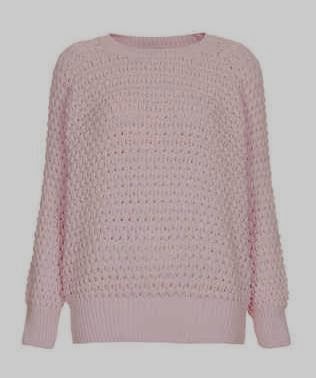
Crimson, the female character in our film comes from a Upper class family, so as she her parents will have an adequate amount of disposable income this will allow her to have a more expensive wardrobe, which could feature designer clothes, bags, accessories etc… However, being as Crimson is first introduced in our film when she is in her house she will be wearing a pair of tight denim jeans, a normal jumper and a pair of pink fluffy socks. She will be in this outfit as she wishes to relax and feel comfortable in her house and as she is alone, she has know one to impress. Although, she is wearing a golden necklace as she is a 'girly girl' and she loves jewelry and shiny things.


Compared to Crimson, the male character Luke, comes from a Working class family who lives on a council estate. He will be wearing a big over sized black jumper, with dark skinny jeans and a pair of Converse.  He shall wear this attire as he is from the 'Gothic' genre and his friends are also Goths. In addition to this, Luke's clothes will not look brand new and they will not look too expensive as he only works at a low paying job and his parents can't afford to waste money on expensive brands.


When crimson appears in the first and last scene she will need to wear similar style clothes to Luke to create this hidden identity of the character.

Wednesday, 15 January 2014

Props Research

Props

All of these objects are the significant prop used. Most other physical objects we use are more 'location' than props.

And, here is the formal props list:

Props List

The Black Widow Script

So the script has been written, ready for the process to take a massive leap into our final product. There isn't much dialogue in the script but it leaves alot of room for actors interpretation of the script so hopefully it will help us make the best film we can.


The Black Widow

Thursday, 9 January 2014

Film Treatment

After the feedback we received from our film pitch, we took on board what people had said and wrote a treatment based on how we want the film to look. This is for the opening of our thriller in detail from visible elements to sounds and lighting.

Wednesday, 11 December 2013

Film Pitch

Here is Reflection Studios pitch for The Black Widow

Evaluation
While pitching our film, we had a confident outlook on our film and were open to anything the 'Studio Executives' could throw at us. We explained our idea well and in depth making it easy for people to understand. However some people still got confused by the story line so we could have made it abit simpler rather than going further.

However when we went under scrutiny we handled the questions well to explain our idea. We kept calm and answered as well as we could. Overall I think our pitch was very good as we got 'commissioned' by the 'Studio Executives' so people must have liked what they heard.

Tuesday, 10 December 2013

Sound Editors

A sound editor in a film is the person who put's all the audio into a film, mixing and mastering of a final product. The key elements of this are: Dialogue, Music and Sound Effects. They have to manage the levels of all these.

The first film to have any sound was 'The Jazz Singer' in 1927 there was synchronized dialogue and musical numbers featured. But this still had to be edited by a sound editor using a 'talkie'. As sound in film began to develop, composers shone through and made the film. Here's a link to an interesting new's article about composers being a directors best friend in film processes: Sound Editors, A Directors Best Friend


Sound editing has developed so much now that in the 2013 film 'Les Miserables' the music numbers were all recorded on set, on the day. Well at least the vocals were, the orchestral element was then later recorded and dubbed onto the soundtrack. This was the first time that vocals were actually recorded on the set of a film and is now acclaimed to be one of the best soundtracks of all time. Not only because of the beautiful music scores but because of the amazing sound editors:

Alot of sound editors use foley, which is sound they have made themselves using objects. This was often heard on the radio for radio plays. We even had a go ourselves at making some sounds.

A famous example of this is is the 'Wilhelm Scream' that you might have heard in things like 'Star Wars' and all sorts of Disney cartoons. But these have become a bit of a joke to film makers. However back in the day it was meant to be a serious sound effect. Here's a compilation of where this scream has been used:

I don't think we'd use this sound in our film, as it sounds too comical for the film we want to produce. Well it's used for comedy purposes now anyway so it's not much of a loss from the thriller genre anyway.

I think that sound can really make a film, no matter how good something can look on screen the sound really does make it. Making the sound editor a very crucial role!

Saturday, 7 December 2013

Target Audience Profile

Simon Davies is an 18 year old male is currently in his last year of sixth form at Hydesville Tower School (Private School) in Walsall. For two years he has studied Media, Drama, Business Studies and English and is set to achieve high grades to allow him to continue his Business Studies at the University of Edinburgh. 

Simon currently lives with his parents but is hoping to move away when he leaves for university and live in an apartment in which his parents will pay for the rent. In his spare time, other than playing cricket and rugby, Simon likes to go to the cinema with his friends to see films of the genre, comedy, horror, thriller, action adventure and Sci-fi. 

The most recent film Simon has been to see was Gravity with his mates from school. However he prefers the old school thrillers such as Psycho (the original) and Vertigo. Even though his parents are rather rich, Simon has to work on Saturdays and Sunday at the local shop, stacking shelves and serving customers. His parents don't always give him everything so he has to earn some money for outings to the cinema and buying DVD's when they're on offer at his local ASDA. Simon also has to get himself places in his Black Mini which his parents got him for his 17th Birthday; he only recently passed his driving test after failing first time round.

When he's not watching films at the cinema or at rugby training, Simon likes listening to his music, especially Indie, Rock and some Pop Bands such as Arctic Monkeys, Fall Out Boy and Linkin Park. Simon's friends don't agree with his music taste and so has to socialise with his mates about films and games consoles. His friends love the film genres he is into and so they all go to the cinema in their free time; mostly Wednesdays.

Target Audience Research

Film classifications can range from a U to 18 in the UK, here are a brief explanation of each rating:


  • Universal product. Suitable for children over 4.
  • Use of drugs are not prohibited.
  •  Mild swearing is acceptable.
  • Sexual relations can be suggested however not shown, other than kissing.

  • May have some inappropriate themes for children. Parental guidance is advised for children under 8.
  • Mild language can be used (e.g Bitch, Cow)
  • Smoking and drinking can be shown however not promoted.
  • No detailed violence some blood can be shown. No gore.
  • Drugs can be shown however should not give out a positive message.


  • Infrequent bad language can be used. The 'F' word can be used.
  • Sexual relations can be shown briefly or implied.
  • Violence can be shown however not in detail.
  • Infrequent drug use can be shown.
  • Must not linger on dangerous behavior.

  • Strong violence can be shown.
  • Frequent use of strong language can be used. The 'f' word can be used more frequently.
  • Use of drugs can be shown.
  • Sexual relations and nudity can be shown.
  • Extremely strong language can be used.
  • Strong horror.
  • Strong blood and gore can be seen.
  • Full nudity and sexual relations can be shown.


We had set for our film classification to be a 12A. The British Film Classification states that 12A/12 films can have infrequent bad language, some violent elements, and some sexual elements. With these in mind we thought that 12A films suggest that children under 12 can see it, however must be accompanied by an adult over 18. If we were making the whole film our's would fit into this sort of infrequent adult situations as the main focus would be on the back story of the characters rather than the actual thriller/murder thing going on.


For our general target audience we have a focus on 16-25 year olds, with a mainly male demographic. This is due the the amount of young men this age that enjoy thrillers and horrors more than other audiences.


These two films 'Old Boy' and 'American Hustle' are both of thriller genre's and like most have main demographic of Males age 16-25. Giving us evidence for choosing this specific target audience

Based on the demographic we researched the average young man and what they appear to enjoy the most. This came down to, films (Thrillers, Comedys and Horrors) music (Often rap or rock) games (GTA, COD etc.) and browsing the internet.

Thrillers also seem to attract those of a higher class too, this could be due to the complexity of some story lines

Friday, 6 December 2013

Early Consideration of Evaluation Questions

In what way does your media product use, develop or challenge forms and conventions of real media products?
Our most obvious challenging convention is a female protagonist, however it has started to become more popular. However we also have also challenged an age convention and having a young couple at the center rather than a pair of 20-30 somethings.

How does your media product represent particular social groups? 
Our product will represent teenagers of both genders and how they interact with each other. This will also represent how a conventional Good Girl x Bad Boy pairing will work when conventions and subversions occur.


What kind of media institution might distribute your media product and why? 
That is unkown at the moment, it depends on the quality of the film and how well it is produced.


Who would be the audience for your media product?
We set out target audience for 16-24 year olds and hopefully that will be our audience for the final product.


How did you attract/address your audience? 
We hope that the actual film will attract our audience as we hope to use elements of classic and modern thrillers to build a wide audience.


What have you learnt about technologies from the process of constructing this product? 
We will learn and use techniques for film making as we go along. These will mainly be in editing and sound.

Looking back at your preliminary task, what do you feel you have learnt in the progression from it to the full product? 
We will have hopefully improved on our skills as film makers, from writing, to filming and editing. 

Thursday, 5 December 2013

Film Narative

When we first got together as a production team, we began to look at a few different ideas that would work as a film in the thriller genre. We began to research the conventions of thrillers and where there'd be a gap in the market for a possible film.

As the process went on we began to look at what would look good as an opening and what marks we could access for the coursework. We had struck with a couple of ideas like kidnap films and stalkers. However we embraced the two ideas and thought of 'The Black Widow.'


Plot
A young couple on the brink of a break up, the boyfriend then pushes his girlfriend to the edge of madness. She does not however only take it out on him, but everyone that has done her wrong in her life; Innocence is ruined, thoughts are betrayed, as her world crumbles apart.

For the opening that we will produce, the murder will remain unknown to the viewer until the very end. There will be some clues suggesting that it is the female character however nothing too over the top.

Pro's and Con's

  • We had been given some feedback when we began to discuss our film idea that alot of the ideas we thought were original, had actually been done before.
  • Idea of hidden identity will work well, if done correct.
  • Locations/Props easy to find (Everyday items).

Saturday, 23 November 2013

Film Title Design: Research

Before the 1950's film titles were not very often, or if they were, low quality. But this all changed when sound in films was introduced and titles began to get more elaborate. And then since the 1960's it became an art form in itself, with many critics claiming "Forget the film and watch the titles." There are even a number of blogs/websites that just talk about film titles alone now. One of these is Art Of The Title: http://www.artofthetitle.com/ that gives a history on the titles, reviews and interviews with the people who made them. Well worth having a look at.

Here is a clever video that shows some of the most iconic titles in film making.

Most all film titles have some form of stylised, written words that flow with the film. Typography word coming from the greeks with typos-form and graphe-writing. The end products for alot of typography can be beautiful and this is also considered art now too, with alot of modern artists basing their work around words.


Here is the opening credits to a thriller: The Purge


Overall it really does the film justices and is very visually pleasing. The music is un-conventional giving a sort of comedy element to the opening. However if I have one thing to pick at, it would be the placement of the typography. It would have been clever to have the names appear as part of the already visual text 'security cam' bars. The shots used in this all give the audience a sense of what they are about to see and to some it may be off putting but other may have gotten more interested in it.

So to be quite honest, when I look at titles everything just sort of has to fit together for me. No edging your way round something and also needs to draw me in as a viewer.

Thursday, 14 November 2013

Production Team!

So we've settled on a production team name and a (basic) logo, to produce our thriller.

Without further ado, we are, Reflection Studios!

REFLECTION STUDIOS
(Robbie, Lucy and Charlotte)

We decided to call ourselves 'Reflection Studios' as it includes our 3 initials (RLC) in the same word. After a while, we had a light bulb moment and thought "REFLECTION!" this lead us onto our idea for an ident we have that out initials will be 'reflected' onto a lake. We think that this name represents us and our production well as it symbolizes our abilities to create ideas that bounce of and reflect the others views on how something should be.

Wednesday, 13 November 2013

Film Distribution In The UK

Distribution of a film, is how the film is released and retailed. The film goes through a number of steps when distributed to make sure the film is accessible to the target audience and the worldwide network.

Here's a little animation about how films are distributed in the UK:

Thriller Opening Investigation

As part of my research for thriller openings I analysed two pieces of real media openings. The Black Swan and Sweeny Todd. Here are some screencast's of the two openings with my narrated deconstruction:


Sunday, 10 November 2013

Here's an interesting theory that we've come across, that no matter how many film there are in the world they all are variations of 22 main stories. Here is a good little illustration that explains the 22 story paths:


Saturday, 9 November 2013

Choosing A Genre To Work With

As a group many of us have been thinking about what genre of film we would be working with for the rest of the year. We researched some films and thought about what the pros and cons of each genre could be. Like this:


And then as a class we compiled all our data together thinking about all the complications and triumphs that can happen with each genre and decided that we would work with the 'Thriller' genre. This is due to the capability of creating something of good quality worth some of the highest marks we are hoping to get for our course. 


Positives of Thrillers: 
  • Realism and Realistic Elements
  • Set/Props/Costume all relatively easy to assess
  • Straight Forward Editing
  • Draws Audience In

Negatives of Thrillers:
  • Hard to fit action into 2 minuets of coursework
There turned out to be alot more positives for choosing a Thriller over everything else from both the creative side and the filming/acting side of it. So hopefully we chose this genre wisely and our coursework will be the best it can be. Now onto thinking of possible narratives!

Friday, 1 November 2013

Researching Advanced Camerawork: Crane Shots

Here is an example of a crane shot we filmed in class:


This was our first time at filming with a crane to create this type of shot, and for a first attempt at something it's fair to say that it wasn't too bad. It may be a little shaky and rough round the edges (Sometimes the individual being filmed went out of shot) but it got across the idea of how a crane shot is used and what it looks like. Hopefully we will work on this and create are more fluid and better quality crane shot in the near future.

This shot is often used in soaps and drama's when someone leaves a place of significance to the character. Giving a high view on what they are leaving behind.

Manual Focussing

Two key terms that are often used when filming Manual Focus shots are:

Depth Of Field: Depth Of Field is the term used for the distance between the object/s that are closest and furthest away in the foreground and background of the shot.

Focus Pull: Focus Pull is the technique used that transfers the focus of the shot from one object to another.

Here is an example from an actual piece of  media:


During this sequence there is a large number of focus pulls, and manual focusing. It especially becomes clear at around 2:30 while Harry is looking at his mom and 2:40 when Niall looks at his Brother. I think this is an excellent example of how the technique is used and suits the video brilliantly.

Here Some Examples of Manual Focus Pulling 


Manual focussing is a technique used in film making, while the camera is rolling to focus and un-focus accepts of the frame and footage. This technique can be used often  to make the audience focus on a certain things in the frame. 

Monday, 28 October 2013

Film Idents

To put it simply a 'Film Ident' is an opening company logo on any film that is produced. Here are a couple of examples from Universal and Fox:


Looking over both of these 'Film Idents' I feel that they are both powerful symbols of film and media alike of our time. Both of these companies are widely recognised for their idents showing that they must be successful in what they are trying to achieve, however they have been revised over the years to suit the films and the audience that will watch the film.

If you look deeper into both of the idents you might recognise their similarities like powerful, orchestral music and shiny, 3D lettering. This gives the audience a perspective on the film already that it's going to be amazing and brilliant due to the sheer power that the idents give off. Also they are both just over 20 seconds long, for a logo on anything else it can be considered too long. But for 'Film Idents' it seems just the right amount of time. If it was to be shorter then it doesn't have as much impact on the audience and their beliefs for the upcoming feature film.

On the other hand you have smaller film companies, who's idents are alot less extravagant, take Film 4 as an example:


Instead of a big, golden animation, Film 4 went with a simple 'live action' formation of the corporate logo (This is also a version of the Channel 4 company logo, the formation of a number for with separate parts). It's also considerably shorter in time and the music is alot calmer than it's big Hollywood counterparts. This gives the reader a much more relaxed approach to the film they will view.

Thursday, 24 October 2013

Opening Credit Research

As a class we gathered data about the opening credits in different genre's of film, by watching them and taking notice of each order that the names/production appears in. We realised that as we looked through the data that in most cases 'Production Associates' are always put first, starting with the studio name e.g universal, paramount.

Next is usually the actors, starting with the 'Major' roles then 'Minor' roles towards the end. Then to finish off people who made the film what it is, this also most the times ends with the 'Director' of the film.


Opening Title Research


However there is a difference between 'Opening Credits' and 'Title Sequences'. Opening Credits are merely just text on a background where as Title Sequences are more complex of that being they are an entirely separate sequence in its own right e.g James Bond films.

This is the opening titles for Scott Pilgrim vs. The World which was part of my research:


As our production team (Myself, Charlotte and Robbie) we were thinking of several ways that we could present our opening credits. We also came up with our production team name of 'Reflection Productions' notice the three letters of our first names feature in the name. This would appear as the first thing you see on the opening credits. This would be followed by:
  • Film Title?
  • Actors?
  • Sound/Edit?
  • Producer?
  • Writer?
  • Director.
This is just a basic idea of a simple some simple opening credits for our coursework. Here's a link to some opening cedits that helped us on creating a simple structure for our works.

Monday, 21 October 2013

Tracking Shots

A tracking shot is a type of camera shot/movement that is often used to physically follow a key character/object on a journey using a wheeled tracking dolly and tracks if you wish. This technique is often used to follow a journey, reveal something far away or out of a shot.

Our Example


To create these shots we used tracks and a tripod dolly. We learnt that when performing a tracking shot timing is key and both the camera operator and actor need to consider each others speeds and actions.

Boogie Nights

This is how the shot is used in the opening of the film 'Boogie Nights' it is clear that during this scene they used a dolly to follow around the characters on the dance floor and in the bar. There is very little dodgy camera movements die to the stability created by the dolly.


Three-Point Lighting

Three-point lighting used used during film making to enhance the look and feel of the film. The term three-point comes from the idea that you are using three different lights, Key Light, Filler Light and a Back Light. Here is a simulated example of how it all works: http://www.mediacollege.com/lighting/three-point/simulator.html

Our Example

This is our example of how three-point lighting is used in the film industry. It is a very important element of film making and can make or break a film. A key light, is the main light used on the person or object being filmed. A filler light 'fills' in the shadows that are caused by the key light. And the back light which is used to make the image look more 3D.

To achieve this we used two 'Red Heads' for the Key and Back lights and used a reflector for the filler light.

Thursday, 10 October 2013

Preliminary Task

The Broken Friendship


What Went Well?
As a production team the three of us (Dan, Charlotte and myself) all worked well together to produce our short film. We all listened to each others creative ideas without overpowering each other in our decisions creating and filming the piece. The actual film itself is of a decent standard for a piece of work, including all the given circumstances set for us to perform in the task. This was also thanks to our willing actors who took the time to give us a great performance to create the film.

What Is Good?
I am particularly proud of our work with the camera angles and camera movements, even though all three of us controlled the camera all the shots flowed well. While editing the match on action shots too we found that the actress had done a good job with matching her movements on each side of the door as she enters making the edit near enough perfect. However as the actress exits this was slightly harder to edit due to the movement of her hair as she turns around, we had to match this movement so her hair hadn't magically switched sides. While editing all of the shots, there was little or no continuity.

Did You Follow The Production Rules?
180 Degree Rule - Yes I believe we kept to the rule, as while the two characters were having a conversation we never went past them and round the back of them. Even as the one actress got up to exit we kept the rule enforced as when she began to move we tracked the camera with her so the audience would understand the movement.
Match On Action - I think we performed these edits and shots well, as explained in the previous question. The edits worked well with the actresses movements and the rule was clearly followed as she entered and exited the room.
Continuity - As observed in our film we believe there is no or little continuity errors throughout.

What Went Less Well?
There was no real issue while making the film other that when filming the 'Match On Action' shots there were some issues with the actors forgetting where their hands/feet were placed so that lead us to filming several versions of the same shot. But there was not issue with anything else while filming and editing the film.

What Did You Learn About Making Films and Working Within a Production Team?
When making a film I learnt that you may have/want to do shots more than once to get the film just right, this may be a bit of a pain but all in all it is worth it for the overall quality of the film.  While working in the production team set up you must have to listen to each other, and take on each-others creative ideas. That is really important if you want your film to be the best it can be, if not then the film could be a total disaster and the team could fall apart. Give everyone equal opportunities and also make sure everyone knows what they are doing in the given point.  

Tuesday, 8 October 2013

Script Research

While writing a script, there are a few things you must remember.

  • A SCRIPTS TEXT MUST BE WRITTEN IN A SIZE 12 COURIER FONT.
  • SCENE MUST BE SET, BEFORE ANY ACTION. INT/EXT, PLACE, TIME OF DAY.
  • FOLLOWED BY A QUICK SUMMARY OF THE ACTION AND STAGE DIRECTIONS.
  • CHARACTER HEADER, DIALOGUE/DIRECTIONS
At school when writing scripts we use 'Celtx' to write like a lot of film makers do now too, this software already has everything set up for the screen writer to write up their ideas. This is all the stuff you need, font, headers layout everything you need for a professional looking script. And you can get a free download of it too!

Here is an example of how the scripts are laid out from The Wizard of Oz:

As you can see, it ticks all the right boxes of how a script should be. Making it a real quality produced script.

Thursday, 3 October 2013

Continuity

The definition of continuity is:
 con·ti·nu·i·ty  
/ˌkäntnˈ(y)o͞oəitē/
Noun
  1. The unbroken and consistent existence or operation of something over a period of time.
  2. A state of stability and the absence of disruption.


In media this would mean there is a mistake in the film in which something is not consistent, e.g an object appearing or disappearing in the scene. Here is a short video explaining continuity and examples of this problem: